It’s World Quality Week (9 to 13 November), and the Chartered Quality Institute’s theme this year is Quality: powering performance. In aerospace, the link between the two is direct. The findings a quality team raises are evidence about how an operation really runs, and an organisation performs better when it acts on them at the cause. We think that works best when quality and safety are treated as one system, and the regulation already sets it up that way.
Quality and safety sit in one management system
Under ORO.GEN.200, an operator’s management system has to identify safety hazards and manage the risks, and it has to monitor compliance and report findings to the accountable manager. CAMO.A.200 and 145.A.200 do the same for continuing airworthiness and maintenance organisations.
In practice, many organisations still keep the two apart. Audit findings live in one system or spreadsheet, safety reports and risk assessments in another, and training records somewhere else. When the audit function and the safety management system work separately, compliance data rarely gets used to spot systemic risk. The gaps between disconnected tools are where risk builds up.
Why findings come back
Repeat findings are one of the most useful measures a quality team has. When the same finding turns up again, the corrective action usually fixed the symptom and left the cause alone.
Nick Laughton, a Senior Consultant at Baines Simmons, the Training & Expertise capability of TrustFlight, has written a series on compliance monitoring for World Quality Week. He has more than 30 years of aviation maintenance and audit experience, most of it in the military, and manages Baines Simmons’ outsourced auditing service for the UK Military Aviation Authority. His example is an auditor who finds a tool out of calibration.
“What we all want to understand is why that uncalibrated tool was available for use in the workspace in the first instance,” he says.
Recalibrating or replacing the tool closes the finding. Stopping the next one means fixing the process that let it be used.
The regulation expects that. When an authority raises a finding, ORO.GEN.150 and its equivalents require the organisation to identify the root cause, define a corrective action plan and show that it has been put in place.
Repeats are also hard to spot. A finding raised two years ago, by a different auditor in a different department, looks new unless someone connects the two.
In this short video, Nick asks what it tells an auditor when an organisation can’t produce its compliance evidence, and what that says about how it manages risk.
Where training and technology come in
Software can keep a finding linked to its root cause, its corrective action, its evidence and the risks it relates to. Whether the root cause is the right one still depends on the people doing the analysis. That’s why TrustFlight puts technology, training and expertise together.
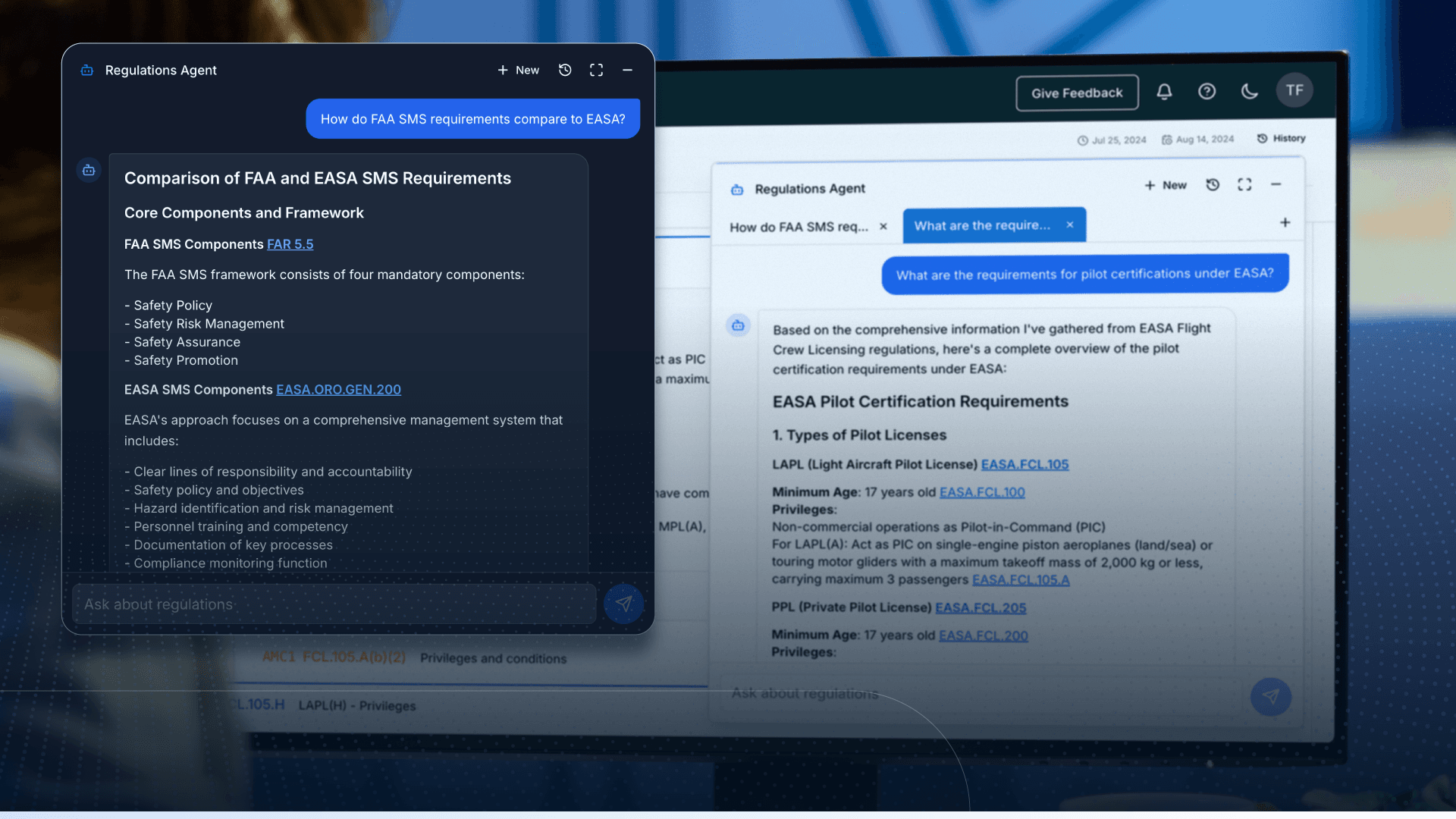
In Centrik, every module shares the same data, so safety reports, risks, audit findings and training records stay linked. Findings are tracked to closure with their root cause and a check that the action worked. Smart Suggestions flags a new finding that looks like an earlier one, so the auditor can decide whether it’s a repeat.
Baines Simmons trains auditors, Audit Team Leaders and compliance monitoring teams, and helps organisations run their compliance monitoring programmes.
Nick’s World Quality Week series
All five parts of Nick’s series are on the Baines Simmons website:
- Why Compliance Monitoring Fails: The Gap Between Auditing and Fixing: why findings keep coming back, and what closes the gap.
- What Does ‘Effective’ Compliance Monitoring Look Like in Aviation?: testing a programme against present, suitable, operating and effective.
- From Finding to Fix: How Root Cause Analysis Closes the Compliance Loop: separating direct causes, contributing factors and root causes.
- Are Your Auditors Ready to Lead? The Case for Investing in Audit Team Leaders: the Audit Team Leader role and the skills it needs.
- The Three Lines of Defence: Building an Aviation Compliance Programme That Works: where each line breaks down, and what makes it strong.
Nick also has short videos on the Baines Simmons LinkedIn page this week.
Talk to us
TrustFlight is the Aerospace Safety Intelligence Platform, working with more than 1,600 organisations in 120 countries. If your audit findings, safety reports and training records sit in different places, get in touch and we’ll show you how Centrik brings them together.