Company Profile
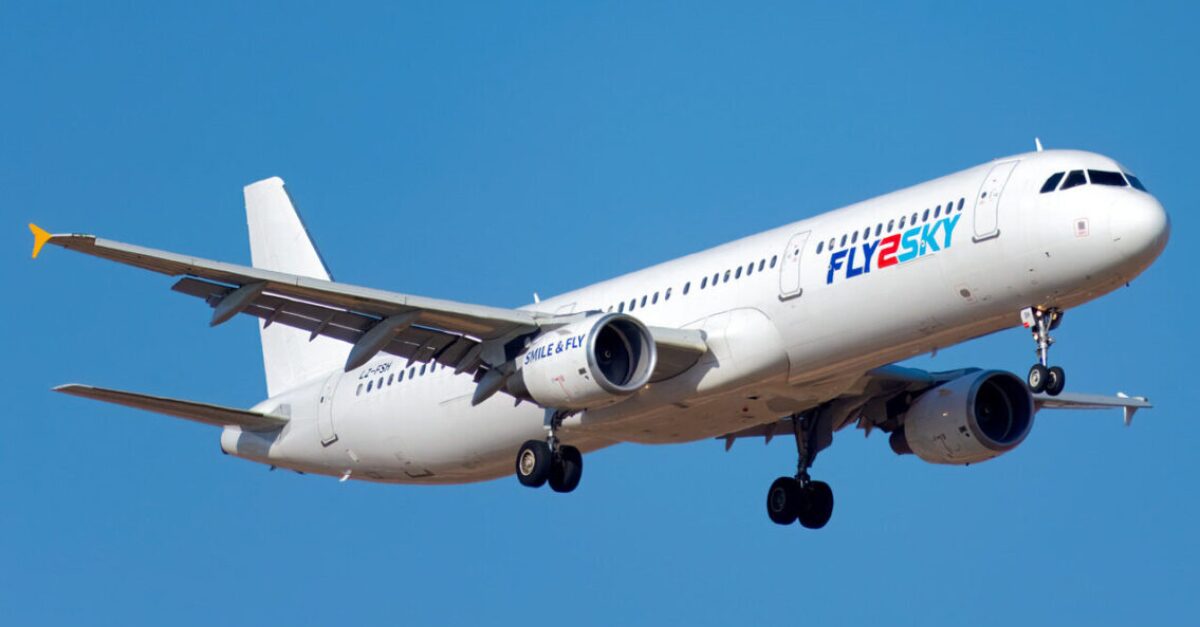
Fly2Sky is a fast-growing, EU-registered ACMI operator headquartered in Sofia, Bulgaria. Operating a modern Airbus A320 family fleet, the airline specialises in providing flexible capacity to operators worldwide. From its base in Sofia, Fly2Sky supports customers across Europe, the Middle East, Africa, the Americas and other global markets, delivering reliable lift without compromise on safety, compliance or service standards.
The airline operates under EASA oversight and maintains a set of approvals and external oversight frameworks appropriate to global charter and wet-lease flying (including IOSA registration and FAA Part 129 operations specifications). As Fly2Sky’s operational footprint grew in both scale and complexity, it became essential to strengthen how safety and compliance evidence was recorded, linked and presented.
The Challenge
Before Centrik became the backbone of the management system, Fly2Sky’s safety and compliance activities were spread across a patchwork of tools, email threads and legacy structures. Audit preparation and follow-up depended heavily on manual consolidation, while document management and training records lived in multiple repositories, creating a recurring risk: important evidence existed but was difficult to retrieve quickly and consistently during audits and customer due diligence.
Early Centrik adoption did not immediately deliver the full step-change it was capable of. Without a clearly defined structure, taxonomy and ownership model, different teams interpreted modules in different ways and Fly2Sky still lacked a single, authoritative source of truth. As regulatory and customer expectations continued to increase, Fly2Sky recognised that its existing approach would not scale. The decision was made to re-baseline how Centrik was used, turning it from a set of modules into an end-to-end operating model.
Why Now?
When Fly2Sky revisited its processes, Centrik’s breadth of functionality emerged as a necessity rather than a nice-to-have. Instead of deploying a point solution for audits or an SMS-only tool, Fly2Sky aligned its Safety Management and Compliance Management (SMS/QMS) processes across Centrik’s integrated modules: Documents, Safety, Risk, Compliance, Workflows, Training and Meetings. Equally important to Fly2Sky was interoperability with operational systems. Centrik’s integration with Leon (Fly2Sky’s operations and scheduling platform) helped safety and compliance oversight sit alongside day-to-day flight operations, supporting a cohesive digital ecosystem rather than siloed data sets.
Implementation Approach
To support the transformation, TrustFlight conducted on-site workshops and deep-dive reviews with Fly2Sky stakeholders. This working style allowed both teams to unpack legacy structures, clarify best-practices and map Fly2Sky’s safety, compliance, training and operational functions onto Centrik’s module framework.
-
Resetting the foundations: governance, structure, and “single source of truth”
A key early step was agreeing the system architecture: what lives in Centrik, what metadata is required and who owns each part of the process. Fly2Sky aligned responsibilities across Safety, Compliance, Flight Operations, Ground Operations, Training and IOCC so that workflows and dashboards reflected real accountability. -
Documents: controlled manuals, procedures, and forms, distributed with traceability
The Documents module was configured as the authoritative home for controlled documentation (manuals, procedures and forms). Revision workflows, approval steps, distribution lists and revision histories were standardised so that crews and ground teams always reference current procedures. This reduced the operational risk of outdated guidance and improved audit readiness by making evidence easier to retrieve and prove. -
Safety + Risk: linking reports, investigations, risk assessments and actions
Safety reporting and investigations were aligned with the Risk module so that hazards, investigations and multi-consequence risk assessments could be linked to findings and corrective actions. This allowed Fly2Sky to move from “separate registers” to a connected view of operational risk across routes, stations, aircraft and operational contexts. Actions could be assigned, tracked and closed with consistent records and evidence. -
Compliance: one environment for planning, execution, findings and CAPA
The Compliance module was structured around Fly2Sky’s external obligations and internal oversight needs (e.g., EASA oversight, IOSA standards and customer audit expectations). Audit programmes could be scheduled, checklists maintained, findings captured and corrective actions tracked in the same environment. The result was a more predictable “audit rhythm” and clearer visibility of open items and due dates. -
Workflows + Meetings + Training: standardising repeatable work
Centrik workflows were introduced to standardise repeatable processes such as management-of-change, corrective action workflows, risk review cycles and meeting action tracking. The Meetings module helped formalise safety and compliance governance forums, ensuring minutes, actions and evidence are consistently recorded. Training records and compliance-linked competence evidence could be maintained alongside safety and audit data, strengthening the integrity of management system evidence.
Results and Impact
Today, Fly2Sky says it is “difficult to imagine operating without Centrik.” By consolidating safety reporting, risk, compliance and controlled documentation into a single, structured platform, the airline has reduced manual audit preparation, improved document control and traceability, and strengthened the linkage between occurrences, investigations, risk assessments and corrective actions. Governance is more consistent through standardised workflows and Meetings, while dashboards provide leadership with a single, up-to-date source of truth on oversight evidence. The return on investment is clear in time saved, reduced administrative overhead and higher-quality decision-making.
Building on this success, Fly2Sky is now in the process of expanding its use of Centrik to Mx Technic, its contracted maintenance organization, and Avora Training Academy, with the intention of using Centrik not only for Operations but also to support HR and wider business processes across the group.
What makes this relevant for ACMI operators
ACMI operations are defined by frequent change: new customers, new routes, different station environments, rapidly changing crew mixes and intensified external scrutiny from authorities, customers and lessors. In that context, “evidence on demand” becomes a capability in itself. Fly2Sky’s use of Centrik demonstrates how a well-governed QMS platform helps an ACMI operator remain agile while still meeting demanding oversight expectations.